Quick answers
- Can I rent out my property in Japan while living overseas?
- Yes, there is no restriction on renting out Japanese property while living overseas.
- What is the difference between a management contract and a master lease (sublease) in Japan?
- Under a management contract, the company finds tenants, collects rent and arranges repairs, and the owner receives actual rent less a percentage fee and bears vacancy.
- How is rental income taxed in Japan for a non-resident owner?
- Rent from Japanese property is Japanese-source income for a non-resident owner.
We gather data objectively from the latest available sources and share what we find useful.
We hope it helps anyone looking for a home in Japan, or considering a business built around property.
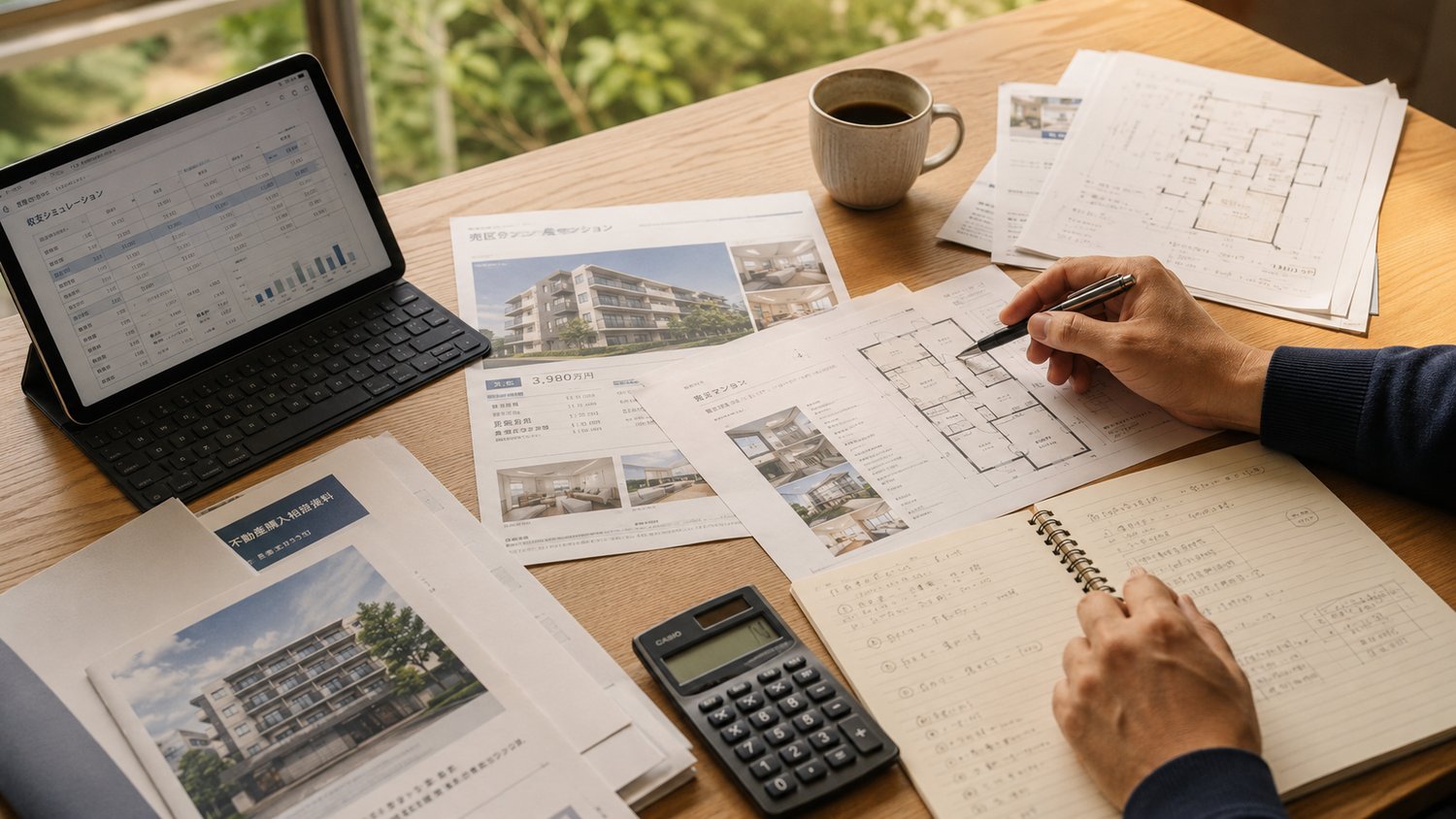
Yes. There is no restriction on renting out Japanese property while living overseas. Day-to-day operation is usually handled by a local management company, and Japanese tax rules apply to the rent.
How Management Is Usually Arranged
Most overseas owners use one of two arrangements:
- How it works
- The company finds tenants, collects rent and arranges repairs for the owner
- Owner's income
- Actual rent, less a management fee (a percentage of rent)
- Vacancy
- Borne by the owner
- Points to check
- Fee, what repairs it can approve without asking, how reports arrive
- How it works
- A company rents the unit from the owner and sublets it
- Owner's income
- A fixed rent from the company, usually below market rent
- Vacancy
- Borne by the company
- Points to check
- When the rent can be revised, and how the owner can end the contract
Companies managing 200 or more rental units must be registered under the Rental Housing Management Act (2020), which also regulates how master leases are explained to owners.
For a condominium unit, the building itself is run by the management association. The owner keeps paying the management fee and repair reserve and receives the association's notices, whether or not the unit is let.
Common Challenges With a Management Contract
Under a management contract the owner remains the landlord, so these situations come back to the owner:
Calls, statements, quotes and notices are usually in Japanese, and the level of detail varies between companies.
Small complaints, such as noise, equipment or neighbours, often come back to the owner for a decision.
Each quote for a water heater, air conditioner or leak waits for the owner's approval, often across time zones.
No rent comes in between tenants, and finding the next tenant has its own costs.
Tenants are well protected under Japanese law, so resolving arrears can take time.
Deciding what is normal wear and what the tenant pays for can lead to disagreement.
With a master lease, the company rents the whole unit and becomes the tenant. It pays the owner an agreed rent every month, whether or not the unit is occupied, and handles subtenants, rent collection, arrears and day-to-day contact itself. For an owner living abroad, most of the concerns above no longer reach them.
The trade-off is a rent below market. The contract terms matter more than the monthly figure, so these points are worth checking before signing:
- Rent revisions. When and how the agreed rent can be reduced during the contract.
- Rent-free periods. Whether any months are unpaid, for example at the start or after a tenant leaves.
- Ending the contract. The owner generally needs a justifiable reason to end it, while the company may be able to cancel; check the notice period on both sides.
- Costs left with the owner. Who pays for repairs, equipment replacement and move-out restoration.
- The company itself. Registration under the Rental Housing Management Act, and the written explanation it must give before the contract is signed.
The Ministry of Land, Infrastructure, Transport and Tourism highlights the first four points in its guidance to owners.
Choosing the Type of Lease
- At the end of the term
- Normally renewed; the owner needs a justifiable reason to refuse
- Paperwork
- Standard contract
- Suits owners who
- Want long, stable tenancies
- At the end of the term
- Ends without renewal; a new contract is possible by agreement
- Paperwork
- Written contract, plus a separate written explanation before signing
- Suits owners who
- May want to use or sell the property at a set date
At move-out, normal wear and tear is generally the owner's cost, while damage caused by the tenant is the tenant's. The Ministry of Land, Infrastructure, Transport and Tourism publishes guidelines that most landlords and managers follow.
Tax on Rent Paid to an Owner Overseas
Rent from Japanese property is Japanese-source income for a non-resident owner.
Owners living abroad usually appoint a tax representative in Japan to file returns and receive notices, including the annual fixed asset tax. The final tax depends on expenses, the ownership structure and any tax treaty, so this is best set up with a Japanese tax accountant before the first tenant moves in.
What Comes Out of the Rent
- Management fee
- Condominium fee and repair reserve
- Vacancy between tenants
- Leasing costs
- Repairs and move-out restoration
- Insurance
- Fixed asset tax
- Tax and accounting
For worked examples, see How Much Does a Japanese Rental Property Earn After Costs?
Before the First Tenant
- Choose the management arrangement and agree what the manager can approve without waiting for you.
- Decide between an ordinary and a fixed-term lease, based on your plans for the property.
- Appoint a tax representative and confirm how rent will reach your overseas account.
- Check the condominium rules, including any restrictions on short-term rentals.
Frequently Asked Questions
Can I rent out my property in Japan while living overseas?
Yes, there is no restriction on renting out Japanese property while living overseas. Day-to-day operation is usually handled by a local management company, and Japanese tax rules apply to the rent. Most overseas owners use one of two arrangements: a management contract or a master lease (sublease).
What is the difference between a management contract and a master lease (sublease) in Japan?
Under a management contract, the company finds tenants, collects rent and arranges repairs, and the owner receives actual rent less a percentage fee and bears vacancy. Under a master lease, a company rents the unit and sublets it, paying the owner a fixed rent, usually below market, and bears vacancy. Check when that rent can be revised and how the owner can end the contract.
How is rental income taxed in Japan for a non-resident owner?
Rent from Japanese property is Japanese-source income for a non-resident owner. The tenant withholds 20.42% from rent paid to a non-resident owner, except when an individual rents the home to live in, for themselves or family. An annual return is filed in Japan, and withholding is credited against the final tax, which depends on expenses, ownership structure and any tax treaty.
Should I use an ordinary lease or a fixed-term lease when renting out property in Japan?
An ordinary lease is normally renewed at the end of the term, and the owner needs a justifiable reason to refuse; it suits owners who want long, stable tenancies. A fixed-term lease ends without renewal and needs a written contract plus a separate written explanation before signing; it suits owners who may want to use or sell the property at a set date.
What costs come out of rental income in Japan?
The management fee, condominium fee and repair reserve, vacancy between tenants, leasing costs, repairs and move-out restoration, insurance, fixed asset tax, and tax and accounting all come out of the rent. For a condominium unit, the owner keeps paying the management fee and repair reserve whether or not the unit is let.
Sources
General information only, not legal, tax or investment advice.